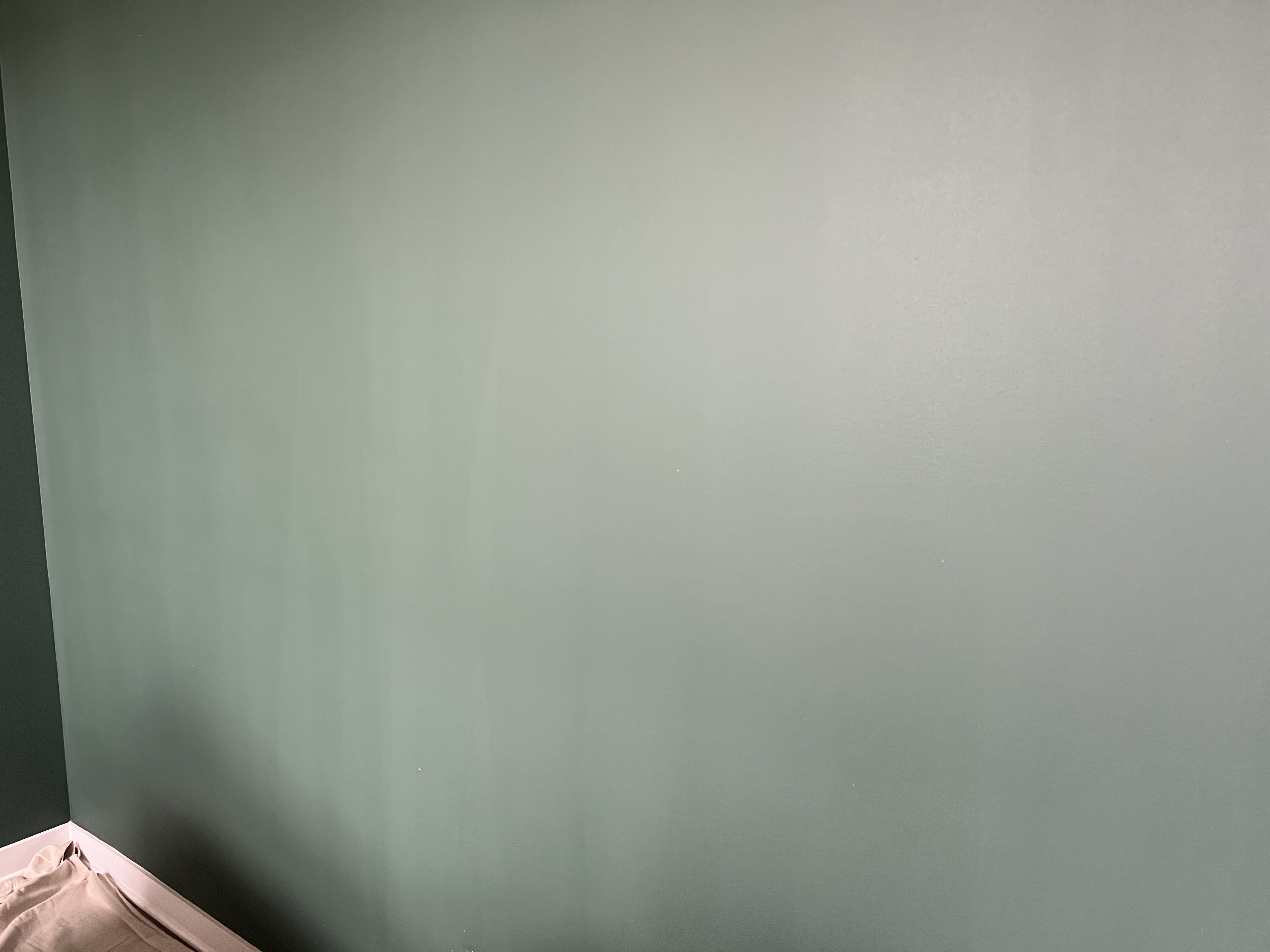
Patchy walls are one of the most frustrating painting problems homeowners deal with. You paid for the room to look fresh, clean, and finished, but instead the walls still look uneven. Some areas look dull. Some areas look shiny. You can see roller marks. The drywall patches are showing. The colour looks inconsistent. The wall looks fine from one angle, then terrible when the sunlight hits it.
At Ottawa Pro Painting, we see this problem all the time. A homeowner calls us after a room was painted by someone else, or after they tried to do it themselves, and the same thing usually comes up: “Why do my walls still look patchy after painting?”
The answer is almost never just one thing. Patchy paint can come from poor wall prep, missed primer, uneven drywall repairs, poor sanding, cheap paint, wrong sheen, bad roller technique, not enough coats, painting over dust, or trying to touch up a wall that really needed to be repainted from corner to corner.
As Ottawa homeowners ourselves, and with over 35 years of family experience in the painting trade, we know how disappointing it is when a paint job does not look right. A professional paint job should look clean in real lighting, not only when the room is dark or when you stand in the perfect spot.
This guide explains what we usually see when walls look patchy after painting, what causes the problem, and how professional painters in Ottawa fix it properly.
Patchy Walls After Painting in Ottawa Home
1) What Patchy Walls Usually Look Like
When homeowners say their walls look patchy, they usually mean one of a few things.
Sometimes the wall has dull spots and shiny spots. Sometimes the colour looks uneven even though two coats were applied. Sometimes the wall looks striped from the roller. Sometimes the drywall repairs show through the paint. Sometimes the cut lines look darker than the rolled areas. Sometimes old patches, nail holes, dents, and sanding marks suddenly become more visible after the paint dries.
We see this often with living room painting, hallway painting, stairway painting, bedroom painting, condo painting, rental property painting, move in painting, and full interior repainting in Ottawa homes.
The most frustrating part is that patchy walls often look worse after fresh paint because the new colour and sheen highlight the surface underneath.
Paint does not hide everything. In many cases, paint exposes what was not prepared properly.
2) The Most Common Problem We See: Flashing
Flashing is one of the most common reasons walls look patchy after painting.
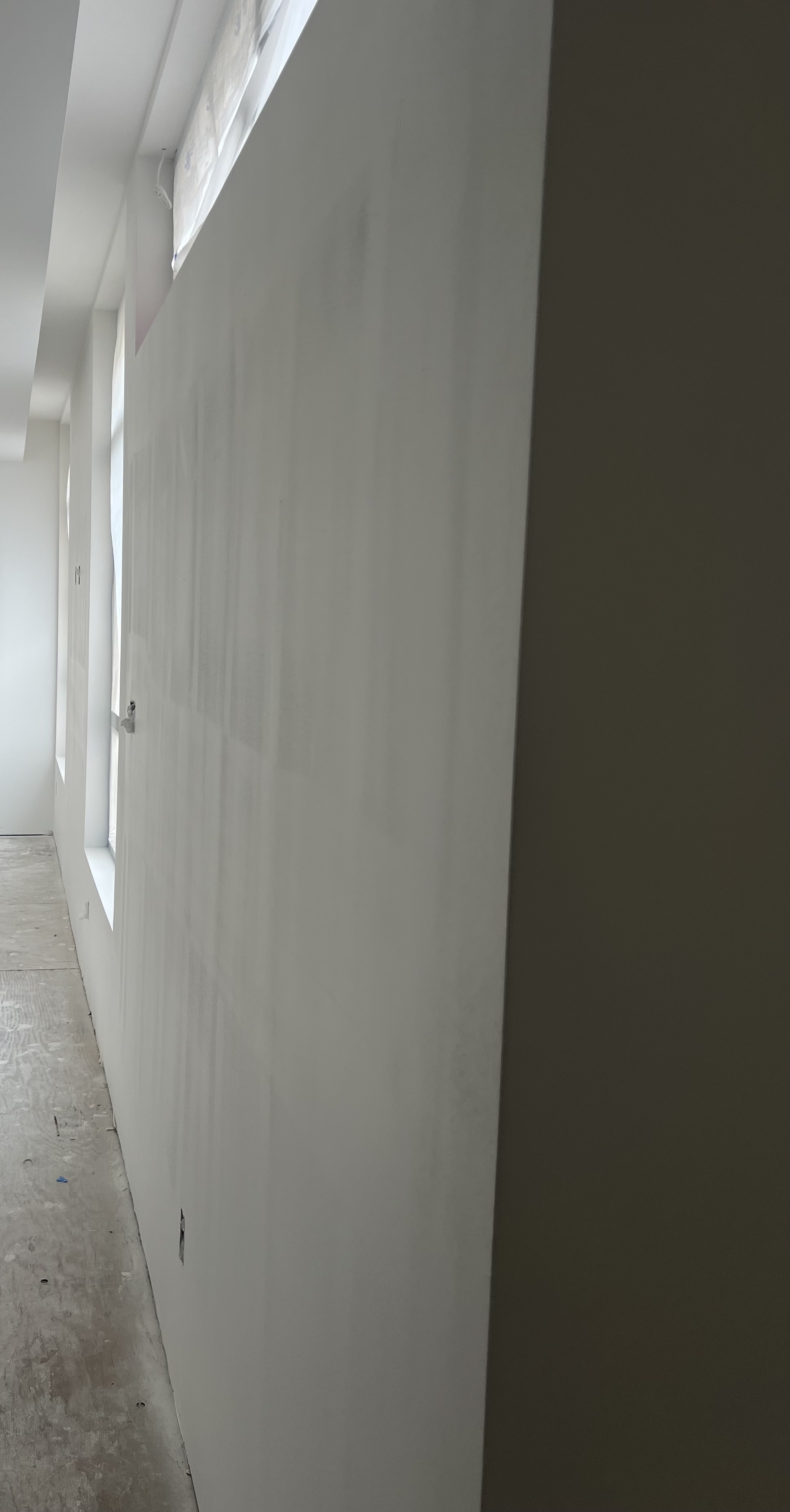
Flashing happens when different areas of the wall absorb paint differently or reflect light differently. The wall may be the same colour, but some spots look dull, shiny, cloudy, or uneven.
This often happens over drywall repairs. A patch made with drywall compound is more porous than the surrounding painted wall. If that repair is not primed before painting, the finish coat can soak in differently and show through as a patch.
This is very common when someone fills nail holes, anchor holes, dents, or drywall damage, then paints directly over the repair without spot priming.
The fix is usually not just another coat of paint. The repair area may need to be sanded properly, sealed with primer, and then repainted so the wall finish looks consistent.
For wall painting in Ottawa, spot priming drywall repairs is one of the small details that makes a big difference.
What Flashing Looks Like After 1 Coat of Primer and 1 Coat of Paint
3) Drywall Repairs Showing Through the Paint
This is probably the issue we get called about the most.
The wall was patched, but now every patch is visible. You can see the outline of the repair. The surface looks raised. The edges were not feathered out. The patch looks rough under light. The paint looks different over the repaired areas.
This usually happens because the drywall repair was not done properly before painting.
A proper repair needs to be filled, feathered, sanded, checked, primed where needed, and then painted. If the compound is left too thick, too rough, or too sharp around the edges, the repair will show.
We see this a lot in hallway painting, stairway painting, living room painting, and rooms with large windows because natural light makes poor repairs stand out.
When Ottawa Pro Painting fixes this type of problem, we usually start by sanding down the rough or raised patches. If needed, we apply another coat of drywall compound and feather it wider so the repair blends into the surrounding wall. After sanding, we prime the repaired areas and repaint the wall properly.
A bad patch cannot be fixed properly by simply painting over it again.
4) Poor Sanding Before Painting
Poor sanding is another major reason walls look uneven after painting.
Sometimes the drywall compound was applied, but it was never sanded smooth. Sometimes the old wall had rough spots, roller lint, dust, bumps, or previous paint texture that should have been pole sanded before repainting. Sometimes sanding was done too aggressively and damaged the drywall paper.
Good sanding is one of those things homeowners may not notice when it is done properly, but they will definitely notice when it is skipped.
Before interior painting, walls should be checked and sanded as needed so the paint has a smoother surface to sit on. This is especially important after drywall repair, popcorn ceiling removal, renovation work, or previous poor painting.
When we are fixing patchy walls in Ottawa homes, sanding is usually one of the first steps. We smooth rough repairs, remove raised edges, dull glossy areas where needed, and create a better surface for primer and paint.
The smoother and cleaner the surface, the better the final paint finish.
5) Roller Marks and Uneven Application
Roller marks are easy to spot once you know what you are looking for.
They can show as vertical lines, stripes, lap marks, heavy edges, thin areas, or sections where the roller pattern is visible. This usually happens when paint is applied unevenly, stretched too far, rolled too dry, or worked after it has already started drying.
Large walls make this worse. Open concept living rooms, stairway walls, hallways, condo walls, and main floor walls can show roller marks clearly because there is more uninterrupted wall surface.
The fix depends on how bad the roller marks are. Sometimes the wall can be repainted using proper technique. Other times, the wall may need light sanding first to remove texture or raised roller edges.
A professional painter controls the amount of paint on the roller, keeps a wet edge, works in proper sections, and applies the paint evenly from top to bottom.
Good application matters. You can use expensive paint and still get a bad result if the technique is poor.
6) Cut Lines Looking Different From the Rolled Wall
Another issue we often see is when the brush cut lines around the ceiling, corners, trim, or doors look different from the rolled wall.
This can happen when the cut lines dry before the wall is rolled, when too much paint is built up at the edges, when the painter does not blend the brushed areas properly, or when the brush and roller leave different textures.
You may see a darker border around the room, shiny edges, heavy brush marks, or a visible frame around the wall.
This is especially noticeable with darker colours, eggshell paint, satin paint, accent walls, and rooms with natural light.
When we fix this, we usually repaint the wall from corner to corner with proper cutting and rolling technique. The goal is to keep the finish consistent so the edges do not stand out from the rest of the wall.
For professional interior painting in Ottawa, clean cut lines matter, but they also need to blend properly with the rolled finish.
7) Not Enough Paint or Not Enough Coats
Sometimes the wall looks patchy because it simply does not have enough coverage.
This happens a lot with major colour changes. Going from dark to light, strong colours to white, bright colours to neutrals, or builder beige to a crisp white can require more coverage than expected.
Some colours are also naturally harder to cover. Whites, off whites, reds, yellows, dark blues, deep greens, and some accent colours can be more difficult depending on the product and the existing wall colour.
One thin coat is rarely enough for a professional repaint. Most interior painting projects need two proper finish coats. In some cases, primer or additional coats may be needed.
At Ottawa Pro Painting, we try to be clear about this before the project starts. If a colour change is significant, or if the existing colour is difficult, the paint system needs to be planned properly.
Stretching paint too far to save time or material usually leads to uneven walls.
8) Cheap Paint or the Wrong Product
Paint quality matters more than people think.
Low quality paint may not cover well, may dry unevenly, may show roller marks more easily, and may not level as nicely. It can also create issues with sheen consistency, especially in rooms with natural light.
This does not mean every project needs the most expensive paint available, but the product should match the room and the expected finish.
A hallway, stairway, kitchen, bathroom, kids room, rental property, or high traffic area needs a more durable product than a low traffic spare bedroom. A dark accent wall needs a product that covers well and applies evenly. A ceiling needs a proper ceiling paint. Trim and doors need the right finish for durability and cleanability.
For interior painting in Ottawa, Ottawa Pro Painting typically uses professional grade products from trusted paint brands such as Sherwin Williams, Dulux, and Benjamin Moore, depending on the project.
The right product will not fix bad prep, but the wrong product can make problems worse.
9) Wrong Sheen for the Wall Condition
Sheen can make or break the final look.
A higher sheen reflects more light, which means it can show more imperfections. Satin paint is more washable, but it can also highlight drywall defects, roller marks, dents, waves, and bad repairs. Eggshell is usually a good balance for most interior walls. Flat paint hides more imperfections, but it gets dirty faster and is usually not our recommendation for most walls in real family homes.
We see patchy looking walls when the sheen is wrong for the condition of the wall.
For example, a rough stairway wall painted in satin may show every repair. A dark accent wall in the wrong sheen may show roller marks. A hallway with poor patching may look uneven after paint because the sheen reflects differently across repairs.
For most wall painting in Ottawa homes, Ottawa Pro Painting usually recommends eggshell for standard walls because it gives a clean look with better durability than flat. Satin can make sense in bathrooms, kitchens, mudrooms, laundry rooms, and some high traffic areas, but it should be selected carefully.
A professional painting company should help choose the sheen based on the room, lighting, traffic, and wall condition.
10) Dark Colours and Accent Walls Are Less Forgiving
Dark colours can look amazing, but they are not forgiving.
Navy, black, charcoal, forest green, burgundy, deep blue, and other bold colours can show roller marks, dust, sanding lines, drywall repairs, uneven sheen, and poor cut lines much more easily than lighter colours.
This is one of the reasons accent wall painting needs careful prep and good application.
If a wall has old patches, dents, rough texture, or previous poor repairs, a dark colour can make those defects more obvious. The wall may need more sanding, better patching, primer, and more careful rolling.
When we paint accent walls in Ottawa homes, we pay close attention to the surface and lighting before applying the colour. A dark feature wall should look rich and smooth, not streaky or patchy.
The darker the colour, the less room there is for sloppy prep.
11) Lighting Makes Everything More Noticeable
Lighting is one of the biggest reasons homeowners notice patchy walls.
A wall may look fine in the morning, then terrible in the afternoon when sunlight hits it from the side. Pot lights can reveal waves and roller marks. Stairway lights can highlight every patch. Low angle light from a window can make a wall look uneven even if the colour coverage is acceptable.
This is very common in Ottawa homes with open concept layouts, large windows, smooth walls, stairways, hallways, and modern lighting.
Sometimes the paint itself is not the main problem. The light is exposing the wall condition underneath.
When we inspect a patchy wall, we look at it from different angles and in different lighting. That helps us determine whether the issue is coverage, flashing, roller marks, drywall repair, sheen, or the wall surface itself.
A professional paint job should be judged in normal living conditions, not only from one perfect angle.
12) Painting Over Dust, Grease, or Dirty Walls
Paint needs a clean surface.
Kitchen walls can have cooking residue. Bathrooms can have moisture and product buildup. Hallways and stairways can have fingerprints and scuffs. Renovation areas can have construction dust. Walls near vents, fireplaces, pets, and high touch areas can collect more dirt than people realize.
If paint is applied over dust, grease, or residue, it may not bond or level properly. The finish may look rough, uneven, or patchy.
This is especially common in kitchen painting, bathroom painting, rental property painting, renovation painting, and move in painting.
Before painting, the surface should be clean, dry, and ready for paint. That does not always mean heavy washing, but it does mean obvious dirt, dust, sanding residue, and greasy areas need to be addressed.
A clean wall gives paint a better chance of looking clean.
13) Touch Ups That Do Not Blend
Touch ups are another common reason walls look patchy.
A homeowner touches up one spot, then suddenly the touch up is more obvious than the original mark. This happens because the old paint has aged, the sheen has changed, the wall was originally rolled and the touch up was brushed, or the paint was applied at a different thickness.
Even if the colour is technically the same, the touch up can still flash.
Touch ups are especially difficult on dark colours, eggshell finishes, satin finishes, older paint, walls with natural light, and high visibility areas like living rooms, hallways, stairways, and accent walls.
Sometimes a small touch up works. Other times, the proper fix is to repaint the entire wall from corner to corner.
At Ottawa Pro Painting, we are honest about this. If a touch up is likely to show, repainting the wall is usually the better option.
14) Patchy Walls After New Drywall or Renovations
New drywall needs primer.
Fresh drywall and drywall compound absorb paint differently than previously painted walls. If new drywall is painted without the proper primer, the finish can look dull, uneven, and patchy.
This is common after basement finishing, renovations, drywall repairs, wall removals, ceiling repairs, and new construction painting.
New drywall should be sealed with the right drywall primer before finish paint. Patched areas should also be spot primed where needed. If this step is skipped, even two coats of paint may not look right.
For new drywall painting in Ottawa, primer is not optional. It is part of the paint system.
15) Patchy Ceilings After Painting
Ceilings can look patchy for the same reasons walls do, but they are often even more unforgiving.
Ceiling patchiness can come from poor drywall repairs, missed primer, uneven rolling, cheap ceiling paint, moisture stains, old texture, popcorn ceiling removal, or painting under difficult lighting.
Smooth ceilings show imperfections easily because light travels across the surface. If the ceiling has seams, patches, waves, or sanding marks, fresh paint can make them more visible.
For ceiling painting in Ottawa, flat ceiling paint is usually preferred because it helps hide small imperfections and reduces glare. After popcorn ceiling removal or ceiling repair, primer is usually very important before finish paint.
A clean ceiling finish depends on proper drywall work, sanding, primer, and careful application.
16) What We Look For When We Are Asked to Fix Patchy Walls
When Ottawa Pro Painting is called to fix patchy walls, we do not just look at the colour.
We look at the drywall repairs, sanding quality, primer, sheen, paint product, lighting, roller marks, brush marks, wall texture, stains, dust, and the number of coats applied.
We also ask what was done before. Were the walls patched? Were the repairs primed? Was it one coat or two? Was there a major colour change? Was the same paint used for touch ups? Were the walls sanded? Was the wall painted in sections over multiple days?
The goal is to find the cause before recommending the fix.
Sometimes the solution is another coat of paint. Sometimes it is sanding and priming patches. Sometimes it is repainting the full wall. Sometimes the drywall repairs need to be redone completely.
The right fix depends on what went wrong.
17) How We Fix Patchy Walls Properly
The repair process depends on the problem, but it usually starts with surface correction.
If the patches are raised or rough, we sand them down. If the repairs are too small or poorly blended, we apply drywall compound and feather the repair properly. If the surface is dusty, we clean it. If the repair areas are porous, we spot prime them. If the whole wall has sheen issues or touch up flashing, we repaint from corner to corner.
If roller marks are the issue, we may lightly sand the wall and repaint it using proper rolling technique. If poor coverage is the issue, another proper coat may solve the problem. If the wrong sheen was used, the wall may need to be repainted with a more suitable finish.
If the problem is water staining, smoke staining, or tannin bleed, stain blocking primer may be required before repainting.
This is why fixing patchy walls is not just a paint over. It is a diagnostic process. The wall needs the correct repair, not just more paint.
18) Why the Full Wall Often Needs to Be Repainted
Homeowners often ask if we can just touch up the bad spots.
Sometimes we can. But many times, the full wall needs to be repainted.
A wall is usually best repainted from corner to corner because corners create natural stopping points. If only the middle of the wall is touched up, the new paint may flash against the old paint. Even if the colour matches, the sheen and texture may not.
This is especially true for living room walls, stairway walls, hallway walls, accent walls, darker colours, and walls with strong natural light.
When Ottawa Pro Painting fixes patchy walls, we try to make the final wall look uniform, not like a collection of small repairs. Sometimes that means repainting the full wall properly after the repairs are corrected.
A proper fix should not look like another patch.
19) What Homeowners Should Avoid Doing
If your walls look patchy, avoid immediately rolling more paint over the whole room without understanding the cause.
If the problem is unprimed drywall compound, more paint may not solve it. If the patch is raised, more paint will not flatten it. If the wall is dusty, more paint may make it worse. If the sheen is wrong, another coat of the same sheen may still highlight the issue.
Avoid using random leftover paint if you are not sure it is the same product, sheen, and colour. Avoid brushing touch ups in the middle of a wall that was originally rolled. Avoid painting over stains without the right primer.
Most importantly, avoid comparing the problem only by colour. Patchy walls are often about sheen, texture, surface prep, and light reflection.
If the wall matters and you want it fixed properly, it is usually worth calling professional painters in Ottawa who can diagnose the issue before repainting.
20) How to Avoid Patchy Walls in the First Place
The best way to avoid patchy walls is to do the prep properly before painting.
Walls should be inspected in good lighting. Nail holes, dents, and damaged areas should be repaired. Patches should be sanded smooth. Dust should be removed. Bare compound should be spot primed. Stains should be sealed with the correct primer. The right paint sheen should be selected. The right product should be used. The wall should receive enough coats. The paint should be applied evenly with proper technique.
This is especially important for full interior painting, move in painting, condo painting, rental property painting, living room painting, hallway painting, stairway painting, ceiling painting, and accent wall painting in Ottawa.
A professional painting company should explain the prep, primer, product, sheen, and coat assumptions before the job starts.
That is how you avoid the problem instead of paying to fix it later.
21) When It Is Time to Call a Professional
If the wall has a few tiny spots, you may be able to touch them up.
But if you are seeing flashing, roller marks, visible drywall repairs, uneven sheen, patchy colour, poor coverage, or rough sanding across a large wall, it is probably time to bring in a professional.
This is especially true if the room has strong natural light, dark colours, high ceilings, stairway walls, smooth ceilings, or large open walls.
At Ottawa Pro Painting, we fix patchy walls by looking at the full system. Surface prep, drywall repair, sanding, primer, sheen, product quality, and application all matter.
At the end of the day, if a wall looks patchy and you want it fixed properly, the right move is to call professional painters who know what caused it and how to correct it.
Why Professional Prep Matters
A professional paint job should look good in real life, not just in photos.
That means the walls should be properly prepared, repairs should be sanded, primer should be used where needed, the sheen should make sense, and the paint should be applied evenly.
At Ottawa Pro Painting, we provide interior painting in Ottawa for homeowners who want a clean, professional finish. Our services include drywall repair, wall painting, ceiling painting, trim painting, door painting, living room painting, bedroom painting, hallway painting, stairway painting, kitchen painting, bathroom painting, condo painting, rental property painting, move in painting, and full home repainting.
With over 35 years of family experience in the painting trade, we know the final result depends on more than the paint colour. It depends on the prep.
Ready to Fix Patchy Walls or Repaint Your Home?
If your walls look patchy after painting, Ottawa Pro Painting can help.
We provide professional interior painting, drywall repair, wall prep, sanding, priming, ceiling painting, trim painting, door painting, and full home repainting in Ottawa.
As a professional painting company in Ottawa, we focus on detailed preparation, clean workmanship, quality products, and a smooth final finish.
Whether you are fixing a poor paint job, repainting one room, correcting bad drywall repairs, updating a condo, preparing a rental property, painting before moving in, or repainting your full home, Ottawa Pro Painting can help.