One of the most common questions homeowners have when reviewing a painting quote is what “minor patching and caulking included” actually means.
It sounds simple, but it matters a lot.
Prep work is one of the biggest differences between a quick repaint and a professional interior painting job. The final result does not only depend on the paint colour. It depends on the condition of the walls, the quality of the patching, the sanding, the caulking, the primer, the lighting, and the finish being applied.
At Ottawa Pro Painting, we include normal minor patching and caulking in many of our interior painting quotes because most homes need some level of preparation before painting. A lived in home will usually have nail holes, small dents, scuffs, tiny gaps around trim, and areas that need light sanding before the first coat goes on.
That is normal.
What causes confusion is when a wall needs more than normal prep. A few nail holes are one thing. A wall covered in screw holes, anchor holes, nail pops, damaged drywall, tape lines, and old repairs is another. Both can be fixed, but they are not the same scope.
As Ottawa homeowners ourselves, and with over 35 years of family experience in the painting trade, we try to make this clear upfront. This guide explains what minor patching and caulking usually includes, what is normally considered extra, and what can still be included in your project when it is specifically noted in the estimate.
Interior Painting Prep Work in Ottawa
1) How We Assess Prep Work
When we see the home in person, we can usually get a clear idea of the level of prep required before painting.
We look at the walls, trim, lighting, previous repairs, nail holes, dents, cracks, caulking gaps, stains, tape lines, drywall patches, and overall surface condition. That helps us decide what is normal minor patching and caulking, and what should be listed separately as additional prep, drywall repair, skim coating, stain blocking, or more detailed wall preparation.
This is why an in person review is always helpful for interior painting in Ottawa homes. Some issues are easy to see right away. Others only show when light hits the wall from the side or when we look closely at previous repairs.
If we are estimating from photos, videos, or a general description, we can still provide guidance, but the prep work may need to be confirmed once we review the property in person. Photos do not always show raised patches, texture differences, wall damage, tape lines, lighting issues, or how much sanding and priming is actually required.
For that reason, estimates based on photos or limited information may be adjusted if the site review shows that the wall condition requires more preparation than originally visible.
2) Why Prep Work Matters Before Interior Painting
A clean paint job starts before the paint is opened.
If the walls are rough, dented, cracked, poorly patched, dusty, or not properly caulked, the final finish will usually show it. Paint can refresh the colour, but it does not magically flatten raised patches, hide bad drywall work, or fix gaps around trim.
This is especially true in Ottawa homes with strong natural light, pot lights, long hallways, stairways, open concept living rooms, smooth ceilings, and darker paint colours.
For interior painting in Ottawa, prep work is what helps the finished walls look clean, smooth, and consistent. That includes wall patching, sanding, caulking, spot priming, and identifying any repairs that go beyond normal painting preparation.
When homeowners compare Ottawa painting companies, the prep work is one of the most important things to compare. One quote may include proper wall preparation, while another may only include applying paint to the walls. Those are not the same paint job.
3) What Minor Patching Usually Includes
Minor patching usually means small drywall repairs that are normal in a lived in home.
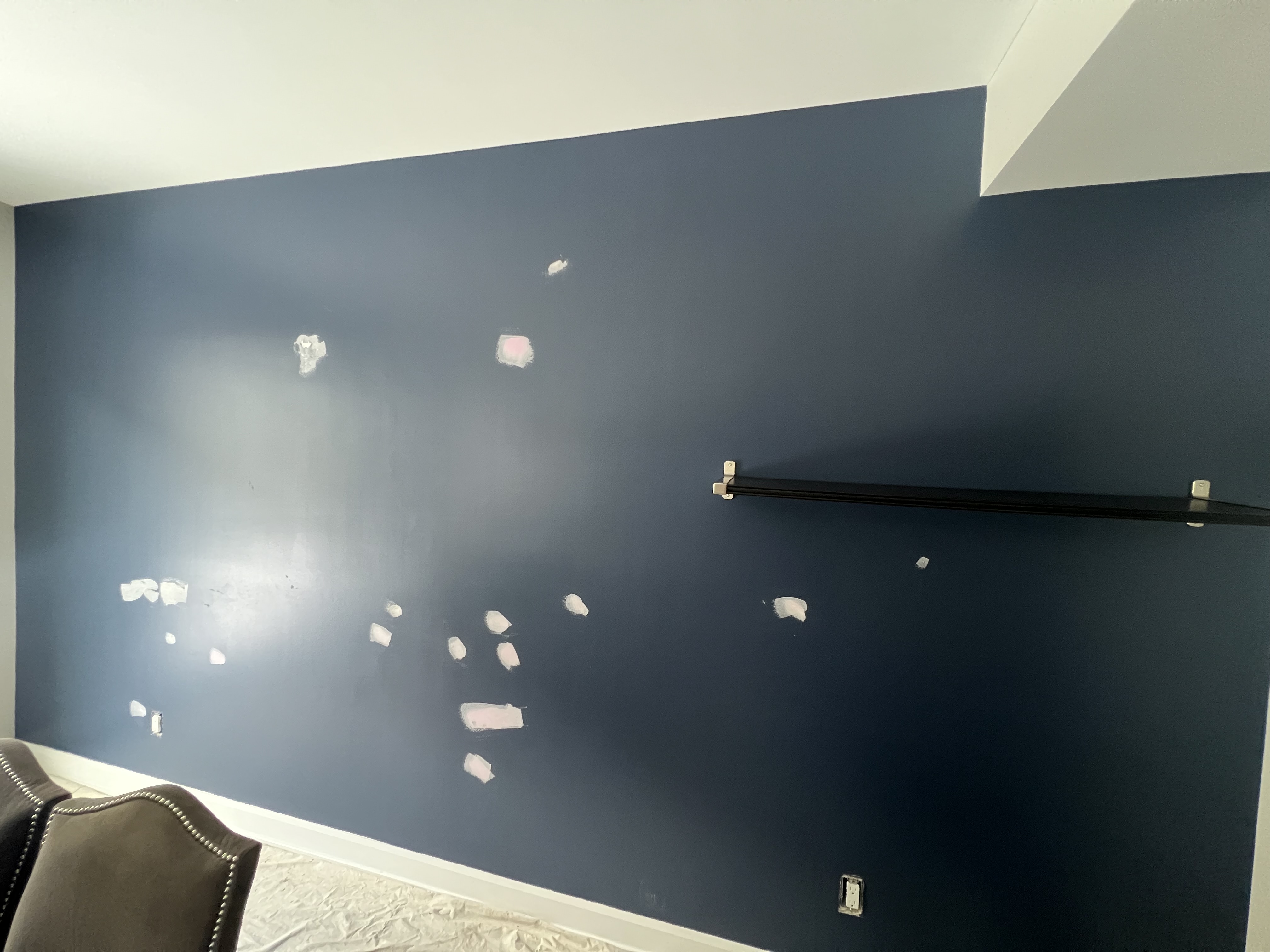
This can include small nail holes, small screw holes, light dents, picture hook holes, small scuffs, and a limited number of shallow wall imperfections.
These are the everyday marks that come from artwork, shelves, furniture, moving, kids, pets, and normal use of the home. For many standard interior painting projects, these small repairs are included as part of normal wall prep before painting.
A few small holes in a bedroom, living room, hallway, dining room, home office, or stairway would usually fall under minor patching.
Example of Minor Wall Patching Before Painting in Ottawa
The key word is minor. The repairs are small, reasonable, and limited.
Minor patching does not mean full drywall repair, full wall restoration, skim coating, repairing every defect in a heavily damaged wall, or correcting years of poor previous repairs unless that larger work is specifically listed in the quote.
4) When Minor Repairs Become More Than Minor
Sometimes the problem is not the size of one repair. It is the number of repairs.
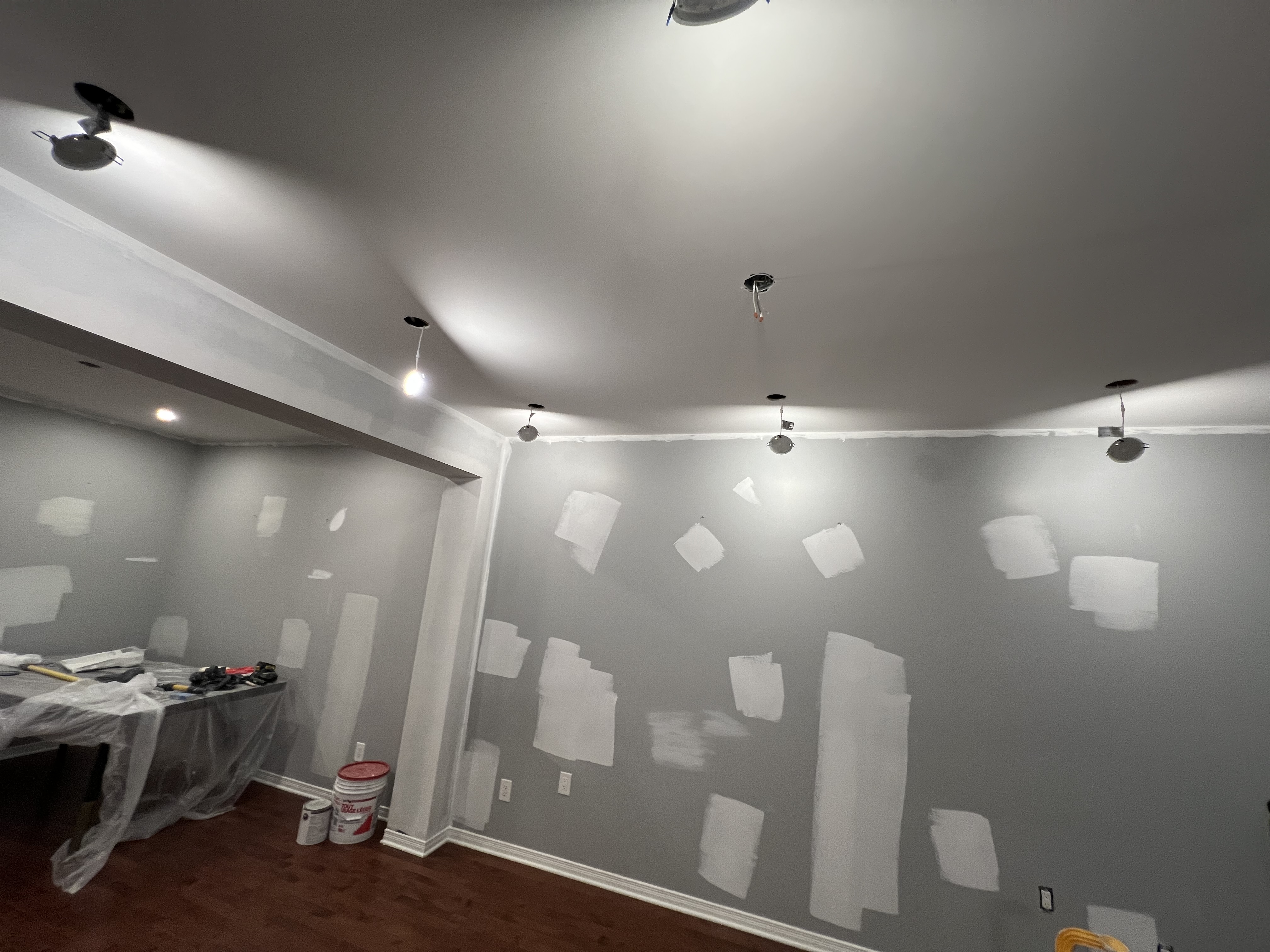
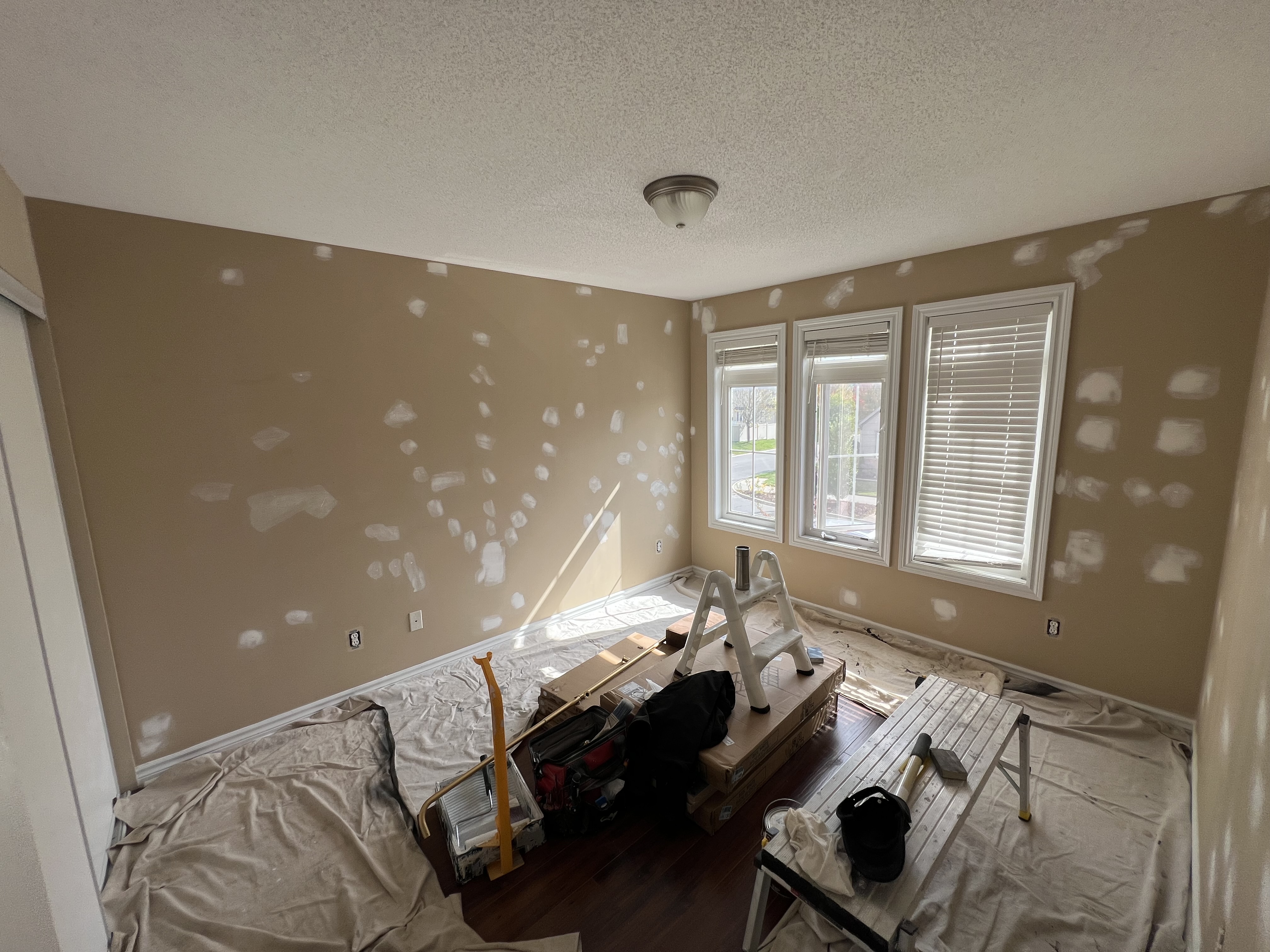
A wall with five or six nail holes is normal minor patching. A wall with dozens of screw holes, anchor holes, dents, nail pops, drywall pops, bracket marks, old shelving holes, and rough previous patches is a different level of prep.
Each repair still needs to be filled, dried, sanded, checked, and sometimes spot primed. When there are many repairs across the same wall or room, the labour increases quickly.
Wall With Extensive Patching Before Painting in Ottawa
We see this often in rental property painting, condo painting, move in painting, homes where televisions or shelves were removed, and rooms with a lot of wall mounted items.
This type of prep can absolutely be included in an Ottawa Pro Painting estimate, but it should be noted separately in the scope. It is not usually part of a basic minor patching allowance.
A good painting quote should make that clear.
5) What Is Usually Considered Extra Drywall Repair
Some drywall repairs go beyond standard painting prep.
This can include larger holes, failed drywall tape, long cracks, water damage, soft drywall, damaged corner bead, torn drywall paper, heavy dents, bad previous patches, texture repairs, and widespread wall damage.
These repairs may need multiple coats of drywall compound, drying time, sanding between coats, spot priming, stain blocking primer, or a larger skim coat to make the surface look right.
That does not mean we cannot do the work. It just means it should be included as its own scope item in the painting estimate.
For example, if your quote specifically says larger drywall repair, tape repair, water stain repair, skim coating, or extensive patching is included, then that work is part of the project. It is just not part of the basic “minor patching and caulking” line.
This helps avoid confusion and makes it easier for homeowners to compare interior painting quotes in Ottawa properly.
6) What Minor Caulking Usually Includes
Minor caulking usually means filling small gaps where painted trim meets walls.
This can include small gaps along baseboards, door trim, window trim, crown moulding, casing, wainscoting, and other painted trim details.
Caulking helps create cleaner lines and a more finished look. It is especially important when painting trim, doors, baseboards, crown moulding, feature walls, and areas where the wall and trim meet.
Small gaps are common in Ottawa homes because houses move with seasonal changes, humidity, heating, cooling, and age. Even well built homes can develop small gaps over time.
When we include minor caulking in a painting quote, we are usually referring to normal small gaps that can be handled as part of the painting prep.
7) What Minor Caulking Does Not Usually Include
Minor caulking does not mean rebuilding trim or filling large construction gaps.
If the trim is loose, badly separated, poorly installed, damaged, missing pieces, or has large gaps, that may require carpentry repair, more extensive caulking, or additional preparation before painting.
Caulking also does not permanently fix movement. If a crack or gap keeps opening because of building movement, caulking may improve the appearance, but it may not stop the issue from coming back.
For interior painting in Ottawa, caulking is a finishing detail. It helps the paint job look clean, but it is not a substitute for proper trim installation, drywall repair, or carpentry work.
If larger caulking or trim repair is needed, it can be included in the project when it is specifically noted in the scope.
8) Sanding Is Part of a Proper Paint Job
Patching without sanding is not finished prep.
After a wall repair is filled, it needs to be sanded smooth so it blends into the surrounding wall. If a patch is not sanded properly, it can show through the paint as a raised spot, rough edge, dull patch, or visible outline.
Light sanding may also be needed on the walls before painting to remove small bumps, dust, roller lint, old paint texture, or rough areas.
This matters in living room painting, bedroom painting, hallway painting, stairway painting, ceiling painting, condo painting, rental property painting, and full interior repainting.
Good sanding is one of those details homeowners may not notice when it is done right. But when it is skipped, the finished paint job can look rough or patchy.
9) Why Spot Priming Matters After Patching
Primer is often needed over patched areas.
Fresh drywall compound absorbs paint differently than the surrounding painted wall. If patched areas are painted without primer, they can flash through the finish as dull spots, shiny spots, or visible patch outlines.
Spot priming helps seal the repair so the finish paint looks more even.
Primer may also be needed over bare drywall, torn drywall paper, water stains, smoke stains, repaired ceilings, darker colour changes, and surfaces with uneven absorption.
For professional interior painting in Ottawa, primer is not always needed everywhere. But it should be used where it matters.
Skipping primer in the wrong areas is one of the most common reasons walls look patchy after painting.
10) When Skim Coating Is the Better Option
Skim coating is different from minor patching.
Minor patching fixes small isolated defects. Skim coating is used when a larger wall area needs to be smoothed or corrected.
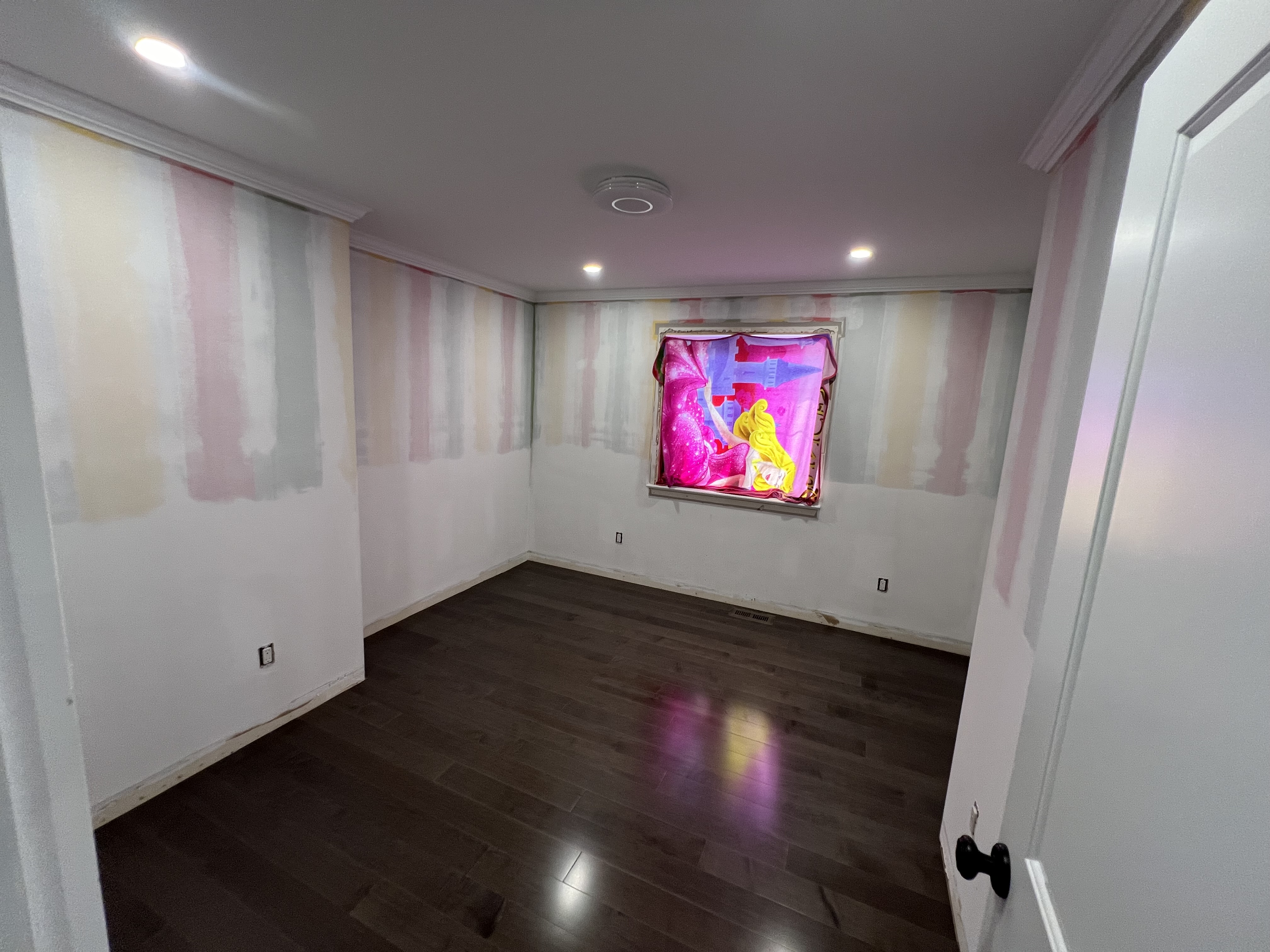
A skim coat may be needed when the wall has visible tape lines, drywall seams, heavy roller texture, many old repairs, wallpaper damage, torn drywall paper, uneven previous patches, or widespread wall inconsistencies.
Skim Coating Walls Before Painting in Ottawa
This is more involved than normal wall prep. It usually requires applying drywall compound over a larger area, sanding, priming, and repainting.
If the whole wall is rough or uneven, spot patching every mark may not be the best solution. A skim coat can create a cleaner and more consistent surface, but it should be priced separately because it is a much larger scope of work.
If skim coating is included in your Ottawa Pro Painting quote, it will be specifically noted. It is not included under basic minor patching.
11) Texture Matching Has Limits
Texture matching can be difficult.
Some walls have roller texture from years of painting. Some ceilings have stipple, knockdown, or old texture. Some walls have previous patches that were never blended properly.
When a repair is made, the patched area may be smoother than the surrounding wall. Even if the patch is done well, texture differences can sometimes show in certain lighting.
This is common with ceiling repairs, popcorn ceiling removal, older homes, rental properties, and walls with many previous repairs.
At Ottawa Pro Painting, we always try to blend repairs as cleanly as possible. But homeowners should understand that perfect texture matching is not always realistic unless a larger area is skim coated or refinished.
Texture blending, ceiling repair, and larger surface correction can be included when noted in the estimate, but they are not usually part of basic minor patching.
12) Lighting Can Change How Prep Looks
Lighting can make wall imperfections more visible.
Natural light, pot lights, wall sconces, stairway lighting, hallway lighting, and large windows can reveal patches, waves, sanding marks, tape lines, and texture differences.
A wall may look fine straight on, but show imperfections when light hits it from the side.
This is especially common in stairways, hallways, open concept living rooms, smooth ceilings, and rooms with darker colours or higher sheen paint.
That does not mean homeowners cannot choose darker colours or more washable finishes. It just means the wall prep needs to match the expectation.
For Ottawa interior painting, this is why we pay attention to wall condition, sheen, colour, and lighting before the final finish is applied.
13) What May Be Included Separately in the Scope
Some items are not part of minor patching or minor caulking, but they can still be included in the job if they are specifically listed in the estimate.
This may include larger drywall repairs, multiple wall patches, failed tape repair, skim coating, water stain sealing, corner bead repair, texture blending, repairing damaged drywall paper, extensive sanding, or more detailed wall preparation.
The important difference is wording.
If a painting quote says minor patching and caulking, that means normal small prep for a typical interior repaint.
If the quote separately lists additional drywall repair, skim coating, stain blocking, or extensive patching, then that larger work is included because it has been specifically allowed for.
This keeps the project clear and helps homeowners understand exactly what they are paying for.
14) How to Compare Interior Painting Quotes in Ottawa
When comparing painting quotes, do not only look at the final price.
Look at the prep.
One painting company may include minor patching, minor caulking, sanding, spot priming, quality paint, and two finish coats. Another may only include a fast repaint with minimal preparation.
Those are not the same project.
For homeowners comparing interior painters in Ottawa, ask what prep work is included. Ask whether drywall patches will be sanded. Ask whether patched areas will be spot primed. Ask whether caulking is included around trim. Ask whether larger repairs are included or extra.
A lower price can sometimes mean less preparation. Less preparation can lead to visible patches, rough walls, flashing, gaps, and a finished paint job that does not look as clean as expected.
15) Our Practical Recommendation
For most interior painting projects, minor patching and caulking are part of getting the home ready for paint.
Small nail holes, light dents, minor trim gaps, sanding, spot priming, and clean preparation help create a better finish.
When walls have heavy damage, many holes, bad previous patches, tape lines, water stains, texture issues, cracks, or widespread defects, the scope should be reviewed and priced properly before painting begins.
At Ottawa Pro Painting, our goal is to be upfront about what your home needs. We want homeowners to understand the difference between normal painting prep and more involved drywall repair.
That way, the final result matches the expectation.
Ready to Paint Your Home?
If you are planning interior painting in Ottawa and want a clear estimate that explains the prep work, Ottawa Pro Painting can help.
We provide professional interior painting, wall painting, ceiling painting, trim painting, door painting, drywall repair, minor patching, caulking, sanding, priming, condo painting, rental property painting, move in painting, and full home repainting in Ottawa.
As a professional painting company in Ottawa, we focus on detailed preparation, clean workmanship, quality products, and a smooth final finish.
Whether you need one room painted, a full interior repaint, drywall repairs before painting, trim and door painting, hallway painting, stairway painting, or help understanding what prep your home needs, Ottawa Pro Painting can help.