Choosing between paint and stain for a deck or fence is not just a colour decision. It affects how the wood looks, how it handles moisture, how it ages, how it is maintained, and how much preparation will be required the next time it needs attention.
In Ottawa, this choice matters even more. Decks and fences here deal with hot sun, heavy rain, spring moisture, snow, ice, freeze thaw cycles, humidity, foot traffic, shaded areas, and long winters. A finish that works well in a warmer or drier climate may not perform the same way on an Ottawa deck or fence.
At Ottawa Pro Painting, we look at deck staining, fence staining, deck painting, and fence painting as exterior wood finishing systems. The right answer depends on the condition of the wood, the existing coating, the exposure, the desired look, and the maintenance the homeowner is prepared for.
As Ottawa homeowners ourselves, and with over 35 years of family experience in the painting trade, we have seen the difference between a deck or fence that was coated properly and one that was rushed. The product matters, but the preparation, moisture conditions, and timing matter just as much.
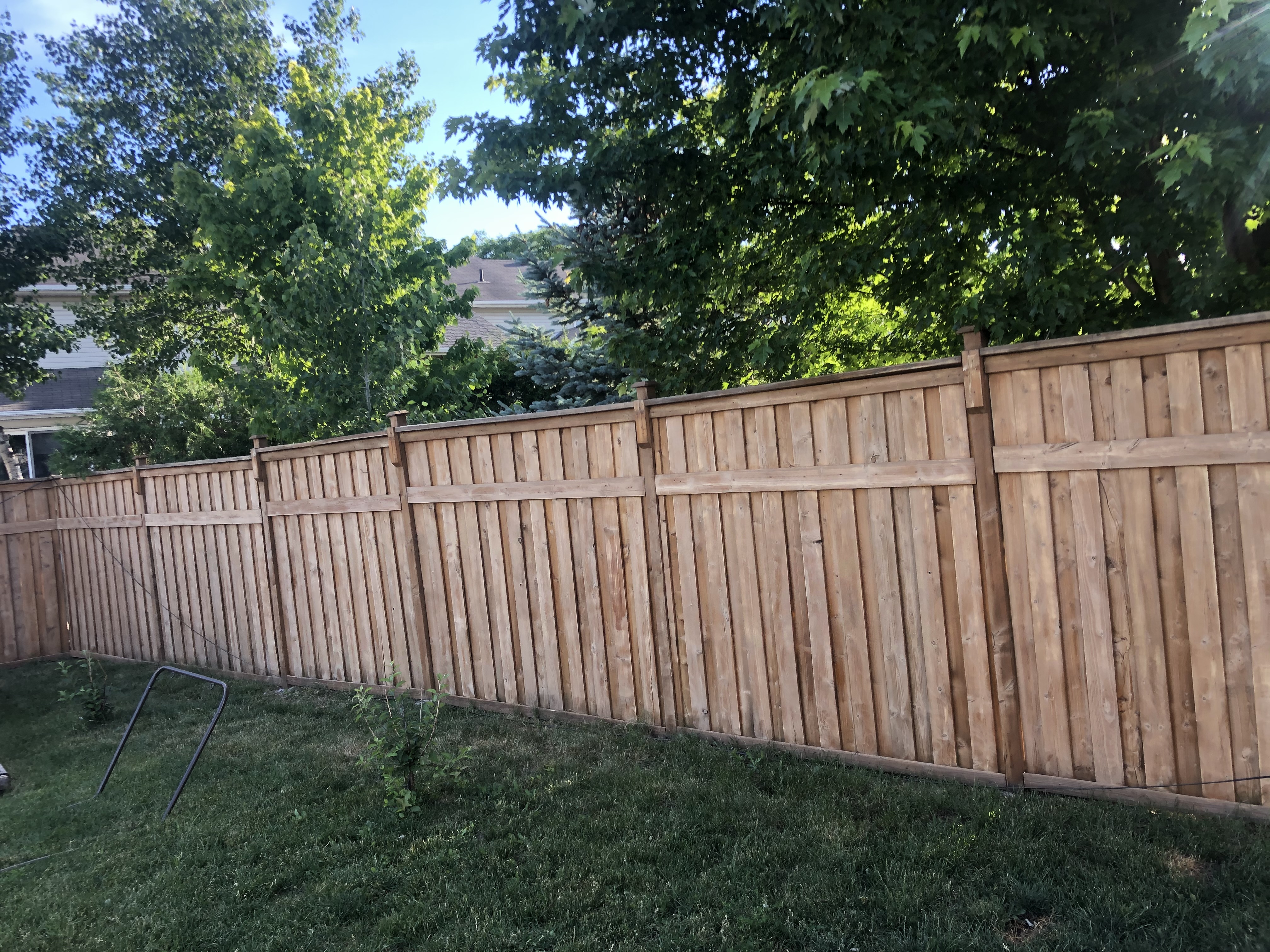
Personally, I love going for walks around Ottawa neighbourhoods, and one thing I notice all the time is how many fences are left completely unmaintained. The reality is that most people do not maintain their fences regularly. Over time, the wood turns grey, dries out, becomes rough, starts to crack, absorbs more moisture, and loses the natural colour it had when it was first installed. That grey weathered look is not just a colour change. It is the surface of the wood breaking down from sun exposure, moisture, and time. Once the wood gets to that stage, it can still often be improved, but it usually needs more cleaning, more sanding, and a more realistic finishing plan.
This guide explains when paint makes sense, when stain is the better choice, what stain finishes are available, what we usually recommend for Ottawa weather, and what homeowners should expect before starting a deck staining, fence staining, deck painting, fence painting, or exterior wood refinishing project.
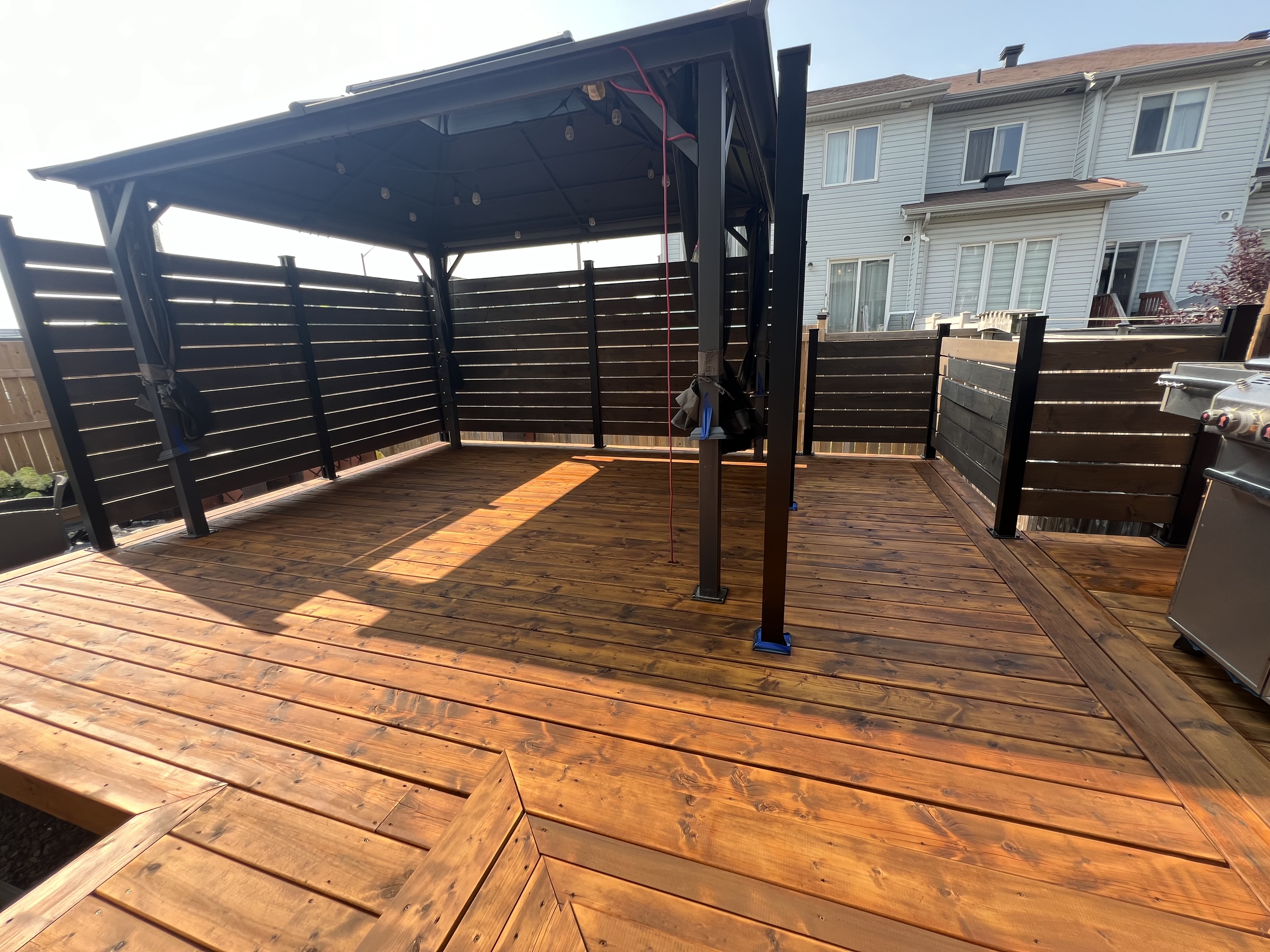
Deck Staining in Ottawa by Ottawa Pro Painting
1) The Short Answer for Ottawa Homeowners
For most wood deck floors in Ottawa, stain is usually the better choice than paint.
Deck boards are horizontal, which means they hold water, snow, ice, dirt, patio furniture, foot traffic, barbecue grease, planters, and everyday wear. Because of that, a thick paint film on deck boards can become a maintenance problem when it starts to peel, chip, or crack.
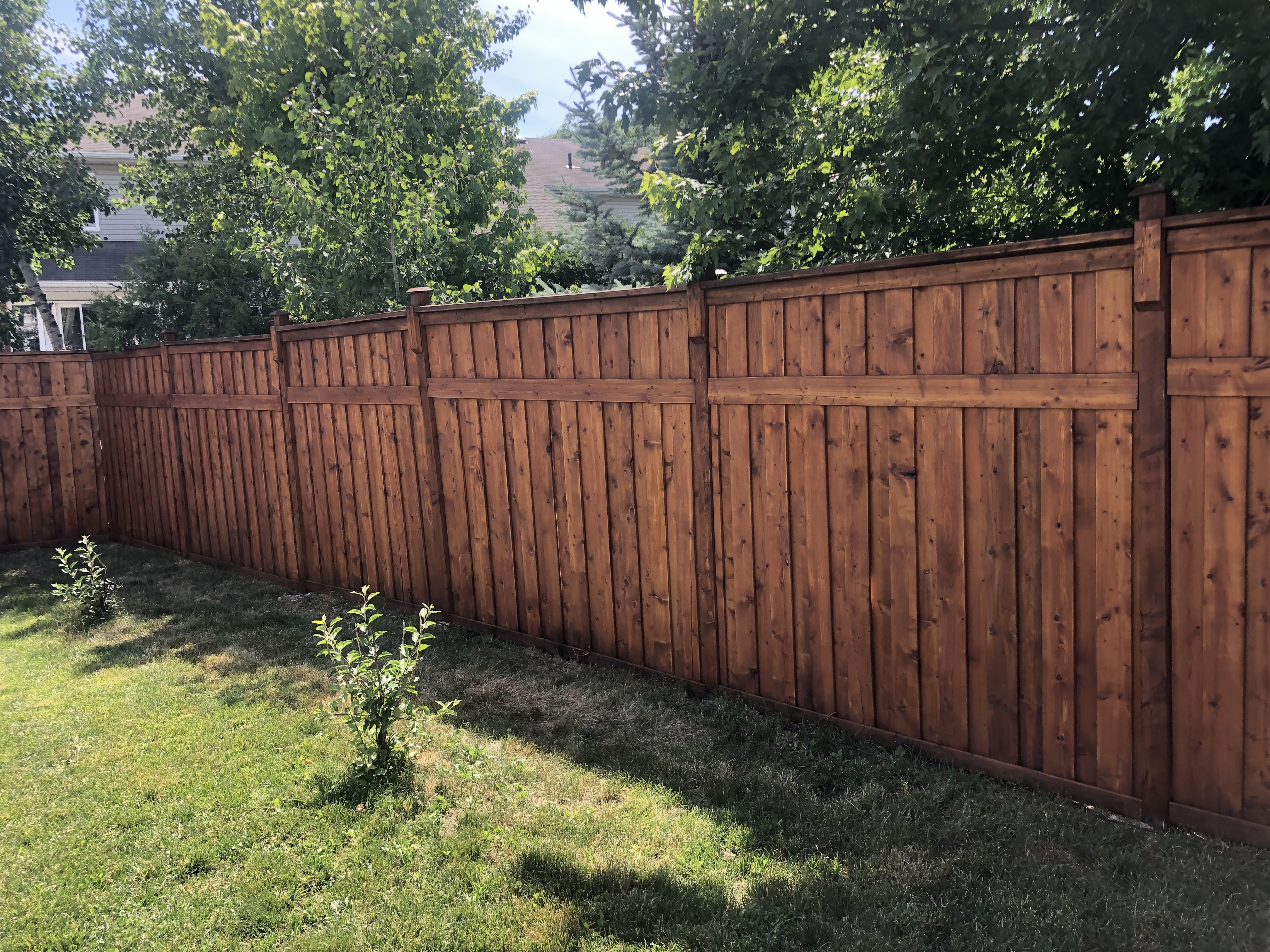
For most wood fences in Ottawa, stain is also usually a strong choice, especially if the homeowner wants to keep some natural wood character. A semi transparent stain is often one of our favourite options because it adds colour and protection while still allowing the grain and texture of the wood to show.
Paint can still make sense in certain situations. It can be the right choice for previously painted fences, exterior trim, railings, posts, vertical deck components, or homeowners who want a solid colour look. But on walking surfaces, especially deck floors and stairs, paint needs to be approached carefully.
At Ottawa Pro Painting, our favourite stain product family for many exterior wood staining projects is SICO ProLuxe, and our favourite finish in many cases is semi transparent stain. It gives a clean natural look, helps enhance the wood instead of completely hiding it, and is usually more forgiving to maintain than a heavy paint film.
For homeowners searching for deck staining in Ottawa, fence staining in Ottawa, or exterior painting in Ottawa, the best advice is simple: choose the system based on the wood, not just the colour sample.
2) Paint and Stain Are Not the Same Thing
Paint and stain protect wood in different ways.
Paint sits more on top of the wood. It creates a thicker film, hides the wood grain, and gives a solid colour finish. This can look clean and modern, but it can also peel when moisture gets behind it or when the wood moves.
Stain is designed to work more with the wood. Depending on the type of stain, it may penetrate into the wood or form a lighter protective finish. Stain usually allows more of the wood grain, texture, and natural movement to show through.
This difference is important because exterior wood moves. Deck boards, fence boards, railings, posts, stairs, and privacy screens all expand and contract as moisture and temperature change. In Ottawa, that movement happens constantly.
When a coating is too thick, applied over damp wood, or placed on a surface that was not prepared properly, it can fail early. That is why the decision should not be based only on colour. It should be based on the full condition of the wood.
A professional painting company in Ottawa should look at the existing finish, moisture exposure, wood age, sun exposure, and maintenance expectations before recommending paint or stain.
3) What Happens When Wood Is Not Maintained?
When a deck or fence is left untreated for years, the wood slowly breaks down at the surface.
Sun exposure dries out the wood and breaks down the natural colour. Rain and snow add moisture. Freeze thaw cycles create movement. The surface starts to turn grey, then rough, then more porous. As it opens up, it can absorb more water, which makes future cracking, cupping, checking, and splintering more likely.
That grey colour people see on old fences and decks is usually weathering. It can look natural in some settings, but it also means the surface fibres are breaking down. Once that happens, stain may not absorb evenly unless the wood is cleaned and sanded properly.
This is why fence staining and deck staining are not only about appearance. A good stain can help slow down weathering, reduce moisture absorption, improve the look of the wood, and make future maintenance more manageable.
The longer wood is left alone, the more prep it usually needs before it can be stained properly.
For Ottawa homeowners, this is especially important because our climate speeds up the wear. A deck or fence that is ignored for several seasons may need pressure washing, sanding, brightening, board replacement, or a more opaque stain finish before it looks right again.
4) What Ottawa Weather Does to Decks and Fences
Ottawa weather is tough on exterior wood.
In summer, decks and fences deal with UV exposure, heat, humidity, rain, sprinklers, and shaded areas that may stay damp. In fall, the temperature swings increase and drying conditions become less predictable. In winter, snow and ice sit on deck boards for months. In spring, thawing, rain, and moisture movement start all over again.
Decks usually take more abuse than fences because they are horizontal surfaces. Water sits on deck boards longer. Snow piles up on them. Foot traffic wears down the finish. Patio furniture scratches the coating. Planters can trap moisture. Stairs and high traffic areas wear first.
Fences are vertical, so they usually shed water better than decks. That helps, but fence boards still fade, dry out, absorb moisture, and weather unevenly depending on sun exposure, shade, landscaping, sprinklers, and soil contact.
This is why deck staining in Ottawa and fence staining in Ottawa need proper prep, the right product, and a suitable weather window. A good finish starts before the stain or paint is opened.
For exterior painting and exterior staining in Ottawa, timing and surface preparation are just as important as the product itself.
5) Why We Usually Prefer Stain for Deck Floors
For most wood deck floors, stain is usually the better long term option.
The main reason is maintenance. A stained deck floor usually wears more naturally. Over time, it may fade, lighten, or wear down in high traffic areas. When it is time for maintenance, the process may involve cleaning, sanding where needed, and applying a maintenance coat.
Paint on deck floors can look great at first, especially when the homeowner wants a solid colour. The problem is what happens later. Once paint starts peeling or chipping on a deck floor, the next maintenance cycle usually becomes more labour intensive. Loose paint needs to be removed. Edges need sanding. Bare areas may need primer. If the peeling is widespread, the prep can become a major part of the project.
Ottawa decks get too much water, snow, movement, and foot traffic for us to recommend paint casually on walking surfaces. It can be done in some cases with the right product and prep, but stain is usually the safer recommendation for long term maintenance.
For deck staining in Ottawa, especially on pressure treated wood, cedar, and older weathered deck boards, we usually prefer a stain system that gives the wood protection without creating an overly heavy surface film.
If a homeowner is trying to decide between deck painting and deck staining, the first question should be whether the deck floor is bare wood, stained wood, painted wood, or failing paint. That existing condition usually decides the best path forward.
6) When Paint Can Still Make Sense on a Deck
Paint is not automatically wrong on a deck. It just needs to be used in the right place and with realistic expectations.
Paint can make sense on vertical deck components such as railings, posts, risers, skirting, fascia boards, privacy screens, and trim details. These areas do not hold water the same way deck boards do and do not get the same level of foot traffic.
Paint can also make sense if those areas were previously painted and the coating is still mostly sound. In that case, repainting may be more practical than trying to strip everything down to bare wood for stain.
Paint may also be chosen when the homeowner wants a solid colour look that matches exterior trim, siding, doors, or railings. A black railing, white privacy screen, charcoal skirt, or painted porch detail can look very sharp when done properly.
The important point is this: paint on a deck floor is a different decision than paint on a deck railing. Walking surfaces need more caution. Vertical surfaces are usually more forgiving.
For deck painting in Ottawa, surface preparation matters even more because paint failures tend to be more visible than stain wear.
7) Why We Usually Prefer Stain for Fences
For most wood fences, stain is a strong choice.
Fence staining in Ottawa works well because a stain can improve the appearance of the wood, add colour, and help protect it from weather while still allowing some of the natural grain and texture to show.
This is especially true for cedar fences, pressure treated fences, newer fence boards, privacy fences, and backyard fences where the homeowner wants a natural exterior wood look.
Stain also tends to be easier to maintain than paint in many cases. When stain ages, it often fades or wears down more gradually. When paint fails, it often flakes or peels, which usually means more scraping and sanding before recoating.
That does not mean stain lasts forever. No exterior wood finish is maintenance free in Ottawa. But for many fences, stain gives a better balance of appearance, protection, and future maintenance.
For homeowners searching for fence staining Ottawa or fence painters Ottawa, the main thing to understand is that the best fence finish depends on the current condition of the wood. New cedar, new pressure treated wood, grey weathered boards, and previously painted fences all need different approaches.
8) When Paint Makes Sense on a Fence
Fence painting can make sense when the fence is already painted or when the homeowner wants a fully solid colour.
If a fence has already been painted and the coating is in decent condition, repainting is often the most practical option. Stain needs access to the wood. If old paint is still on the fence, a penetrating stain cannot properly reach the wood unless the paint is removed.
A painted fence can also create a very clean and modern look. Black fences, white fences, charcoal fences, and other solid colour fences can work well with certain homes and landscaping styles.
The trade off is maintenance. If a painted fence starts peeling, future repainting will require scraping, sanding, spot priming, and careful prep. The more peeling there is, the more work the next project becomes.
For fence painting in Ottawa, the most important factors are the condition of the existing coating, whether the wood is dry, whether the loose paint has been removed, and whether the right exterior product is being used.
A professional Ottawa painting company should be honest about this. Painting a fence can look excellent, but if the existing coating is already failing, the prep work cannot be skipped.
9) Understanding Stain Finishes
Not all stains look or perform the same. The finish you choose affects appearance, protection, maintenance, and how much of the wood grain remains visible.
A clear or nearly clear finish shows the most natural wood. It gives the most natural look, but it offers the least colour pigment. Less pigment usually means less help against UV fading, so clear finishes tend to require more frequent maintenance.
A transparent stain adds some colour while still showing a lot of the wood grain. It can be beautiful on newer wood or cedar, but it will not hide many imperfections.
A semi transparent stain is often our favourite balance for decks and fences. It adds colour, helps enhance the wood, allows the grain to show, and usually gives a more natural appearance than solid stain or paint. For many Ottawa deck staining and fence staining projects, semi transparent stain gives homeowners the look they actually want: finished, protected, but still natural.
A semi solid stain gives more colour coverage. It hides more variation and weathering than semi transparent stain while still showing some wood texture. This can be useful on older decks or fences where the wood is not perfect but the homeowner does not want a fully painted look.
A solid stain hides most of the grain and gives a more uniform colour. It can be useful for older, weathered, or uneven wood. It usually provides stronger colour coverage, but it starts to look closer to paint. Depending on the product and buildup over time, maintenance can become more similar to paint than a lighter stain.
The right stain finish depends on the age of the wood, the existing coating, the colour goal, the amount of grain you want to see, and how much maintenance you are comfortable with.
For deck staining, fence staining, exterior wood staining, and backyard fence refinishing in Ottawa, this finish selection is one of the most important decisions in the whole project.
10) Why We Like Semi Transparent Stain
For many Ottawa decks and fences, semi transparent stain is the finish we like most.
It gives the wood colour and depth without completely hiding the grain. It usually looks more natural than paint or solid stain, especially on cedar, pressure treated wood, and backyard fences. It also ages in a way that is often easier to maintain than a thick coating that peels.
Semi transparent stain is not magic. It still needs proper cleaning, sanding where needed, dry wood, good weather, and the right application. It also needs maintenance over time.
But when the wood condition is suitable, semi transparent stain gives one of the best combinations of appearance, protection, and maintainability.
This is why Ottawa Pro Painting often recommends semi transparent stain for deck staining, fence staining, privacy screens, railings, and exterior wood features where the homeowner wants a clean natural finish.
Semi transparent stain is especially useful for homeowners who want their deck or fence to look refreshed without making the wood look painted.
11) Our Favourite Product Family: SICO ProLuxe
One of our favourite stain product families is SICO ProLuxe.
We like SICO ProLuxe because it has professional grade exterior wood finish options and a strong reputation for exterior wood surfaces. Depending on the exact product selected, it can be used for decks, fences, siding, railings, exterior wood, and other outdoor wood features.
For some projects, SICO ProLuxe SRD RE may be a good fit. It is a one coat exterior wood finish designed for surfaces such as decks, fences, siding, railings, outdoor furniture, and other exterior wood. The one coat system can be a major benefit when the surface is properly prepared and the product is suitable for the project.
For deck projects where a higher build deck specific system is desired, SICO ProLuxe Premium Deck is another option. That product is a one product, two coat application designed for exterior decks. This is why it is important not to assume every SICO ProLuxe stain is applied the same way.
The key is choosing the correct SICO ProLuxe product for the surface. Deck boards, fences, railings, siding, and previously coated wood may require different products or preparation.
At Ottawa Pro Painting, we do not recommend a product only because the label looks good. We look at the wood, the existing coating, the weather exposure, the desired finish, and the maintenance expectations before choosing the system.
For homeowners looking for professional deck staining in Ottawa or professional fence staining in Ottawa, product selection should always be tied to the actual surface conditions.
12) One Coat Stain Systems: What Homeowners Should Know
A one coat stain system can be very practical, but it needs to be used properly.
Some exterior wood finishes, including SICO ProLuxe SRD RE, are designed as one coat systems. That does not mean the prep is less important. In fact, prep becomes even more important because the single coat has to be applied evenly, absorbed properly, and placed on wood that is clean and dry.
With stain, more coats are not always better. Applying extra coats when the product is not designed for it can cause tackiness, uneven sheen, poor penetration, or premature failure. This is why the product instructions matter.
For homeowners, the key takeaway is simple. A one coat stain can be excellent when the product calls for it and the surface is ready. A two coat system can also be excellent when the product calls for two coats. The right answer depends on the product and the wood, not on assuming more coats automatically means better quality.
This matters a lot for deck staining and fence staining because over application can create just as many problems as under application.
13) Why Pressure Washing Is Usually Required
Pressure washing is often required before deck staining or fence staining because exterior wood collects dirt, pollen, dust, mildew, algae, loose grey fibres, old coating residue, barbecue grease, leaf tannins, and general weathering.
Stain needs a clean surface. If contaminants are left on the wood, the stain may not penetrate or bond properly. The finish may look uneven, wear faster, or fail sooner than expected.
Pressure washing helps remove surface dirt and loose material so the wood can be properly evaluated and prepared. It is especially important on older decks, shaded fences, grey wood, dirty deck boards, and surfaces that have not been maintained in years.
The pressure needs to be controlled. Too much pressure can damage the wood, raise the grain, leave wand marks, or create a rough surface. The goal is to clean the wood, not carve into it.
After pressure washing, the wood must dry properly before stain or paint is applied. This step is often where homeowners get into trouble. A deck can look dry on the surface while still holding moisture inside the boards, cracks, gaps, and end grain.
For deck staining in Ottawa, pressure washing is usually only the cleaning stage. Sanding, drying time, moisture checks, and product selection still matter.
For fence staining in Ottawa, pressure washing can make a major difference because fence boards often collect grey fibres, dirt, pollen, and organic growth that prevent stain from absorbing evenly.
14) Sanding After Washing
Sanding is often required after washing, especially on deck floors.
Pressure washing can raise the grain of the wood. Older boards may also have rough fibres, splinters, loose coating edges, and uneven areas that need to be smoothed before staining.
For most deck staining projects, 60 to 80 grit sandpaper is usually a good range for deck boards. Rough, weathered, or splintered boards may start closer to 60 grit, while newer or smoother boards may only need 80 grit. Handrails, benches, and areas people touch often may be finished closer to 100 grit for a smoother feel.
For fence staining, sanding is usually lighter and more targeted. A newer fence may need very little sanding, while an older grey or weathered fence may need more prep to remove rough fibres and loose material.
A smooth, clean, dry surface gives stain a better chance to absorb evenly and perform properly.
15) Drying Time and Moisture Matter
Moisture is one of the biggest reasons deck and fence finishes fail.
If wood is stained or painted before it is dry enough, the coating may not absorb, bond, or cure properly. This can lead to peeling, bubbling, tackiness, uneven colour, blotching, or early wear.
In Ottawa, this matters because humidity, morning dew, shaded yards, rain, and cooler evenings can slow drying. A deck in full sun may dry much faster than a fence beside trees or a shaded stair landing.
This is why a proper deck staining company should not rush the project after pressure washing or rain. The wood needs time to dry. The forecast needs to be suitable. The product needs enough time to set before the next rain or heavy dew.
When conditions are questionable, waiting is usually better than forcing the job.
For exterior painters in Ottawa, weather judgment is part of the job. Sometimes the best decision is to delay the stain so the final finish has a better chance of lasting.
16) Weather Conditions for Staining
Deck staining and fence staining should be done in the right weather.
The surface and air temperature need to be within the product range. The wood should be dry. The forecast should be clear enough for the product to set. Direct hot sun should usually be avoided because it can cause stain to dry too quickly and create lap marks or uneven absorption.
Morning dew can also be a problem. A deck may look fine in the afternoon, but if dew forms heavily overnight before the coating has cured enough, the finish may be affected.
Wind can also matter, especially if stain is sprayed. Overspray, dust, leaves, and debris can affect nearby surfaces and the final finish.
For deck staining in Ottawa, the best days are usually dry, mild, stable days with manageable sun exposure and no rain immediately before or after the work.
For fence staining in Ottawa, the same idea applies. The wood needs to be ready, and the forecast needs to allow the stain to cure properly.
17) New Pressure Treated Wood
New pressure treated wood often needs time before it is ready for stain.
Fresh pressure treated lumber can contain moisture and treatment chemicals. If stain is applied too soon, it may not absorb evenly or bond properly.
The old rule of waiting a full year is not always accurate, but the wood does need to be ready. Some pressure treated wood dries faster depending on sun, airflow, season, and how wet it was when installed. Other decks stay damp longer, especially in shaded yards.
The best approach is to test the wood rather than guess. The surface should be clean, dry, and ready to accept stain. If water beads heavily on the surface, the stain may not penetrate properly.
For new deck staining in Ottawa or new fence staining in Ottawa, patience can save a lot of frustration. Coating too early can lead to poor absorption, uneven colour, and premature maintenance.
A professional painting contractor in Ottawa should be able to explain whether new pressure treated wood is ready or whether it should be left to dry longer.
18) Previously Stained Decks and Fences
Previously stained decks and fences need to be assessed before recoating.
If the old stain is worn but not peeling heavily, the process may involve cleaning, sanding where needed, and applying a compatible maintenance coat.
If the old stain is failing, peeling, glossy, thick, or uneven, more prep may be required. Some areas may need stripping or more aggressive sanding before a new stain can be applied.
Compatibility is important. Not all stains can go over all previous coatings. Oil based, water based, solid, semi transparent, and film forming products can behave differently.
This is why we look closely at the existing finish before recommending a product. The new stain has to work with the surface that is actually there, not the surface we wish was there.
For Ottawa homeowners, this is especially important when buying a home with an older deck or fence. You may not know what product was used before, so the surface needs to be checked carefully before restaining.
19) Previously Painted Decks: Repaint or Stain?
Previously painted decks are one of the most important situations to get right.
If a deck has already been painted, switching to stain is usually not simple. Stain needs access to the wood. Paint blocks penetration. Unless the old paint is fully removed down to bare wood, a penetrating stain will not work properly.
If the existing paint is mostly sound and the homeowner wants to keep a solid colour, repainting may be the most practical option. The prep would usually include cleaning, scraping loose paint, sanding edges, spot priming bare areas, and applying the correct exterior deck or porch coating.
If the existing paint is peeling badly, repainting becomes more complicated. All loose and failing paint needs to be removed. If large areas are failing, the homeowner needs to understand that the surface may continue to be high maintenance unless the old coating is removed more thoroughly.
If the homeowner wants to stain a previously painted deck, the old paint generally needs to be stripped or sanded off enough to expose clean wood. This can be labour intensive and may not always be cost effective, especially on older deck boards with deep paint buildup, cracks, cupping, or damage.
In many cases, a previously painted deck floor is either repainted with clear expectations or restored more aggressively before switching to stain. There is no honest shortcut. Stain over paint is not a proper solution.
This is one of the most common questions we get about deck refinishing in Ottawa, and the honest answer is that the existing coating usually decides the best path.
20) Previously Painted Fences: Repaint or Stain?
Previously painted fences are similar, but usually easier to manage than deck floors because fences are vertical and do not get foot traffic.
If the fence is already painted and the paint is mostly sound, repainting is often the most practical option. Loose paint should be scraped, glossy areas should be sanded, bare wood should be primed where needed, and the correct exterior paint should be used.
Switching from paint to stain is only realistic if the paint is removed enough for the stain to reach the wood. On a large fence, that can be a lot of labour.
If the fence paint is failing badly, the homeowner has to decide whether to invest in heavy prep, repaint with realistic expectations, or consider replacing boards if the wood is in poor condition.
For fence painting in Ottawa, the goal is to be honest about the existing coating. Paint can look great on a fence, but the future maintenance depends on how well the old paint is prepared.
A fence painting project should never be priced as if the existing paint does not matter. The old coating is part of the job.
21) Older Weathered Wood
Older wood can often be improved, but expectations need to be realistic.
Grey, cracked, splintered, cupped, or heavily weathered boards may not look brand new after staining. Cleaning and sanding can improve the surface, but stain cannot fully reverse years of sun damage, moisture movement, cracking, and wear.
For older decks and fences, semi solid or solid stain may sometimes be a better choice than semi transparent stain because it can hide more colour variation and surface aging.
Semi transparent stain looks best when the wood still has enough visual quality to show. If the wood is too uneven, too patched, or too weathered, a more opaque finish may give a cleaner final appearance.
In some cases, damaged boards should be replaced before coating. Stain and paint are not structural repairs. They improve appearance and help protect the wood, but they do not fix rotten, soft, or failing boards.
For older deck staining in Ottawa and older fence staining in Ottawa, the goal is usually to improve, protect, and refresh the wood while being honest about what the existing surface can achieve.
22) Deck Floors, Railings, Stairs, and Vertical Surfaces
A deck is not one surface.
Deck floors and stairs get the most wear because they are walked on and exposed to standing water. These areas usually need the most careful product choice and maintenance planning.
Railings, posts, spindles, fascia, skirting, and privacy screens are vertical surfaces. They usually shed water better and may hold coatings longer. These areas may be suitable for paint, solid stain, or a different finish than the deck floor.
This is why a deck can sometimes use a mixed system. For example, the deck boards may be stained with a semi transparent finish while the railings or vertical components are painted or finished in a solid colour.
For deck painting and deck staining in Ottawa, it is often better to think about the deck in sections rather than forcing one product onto every surface.
A professional deck staining company should look at deck boards, stairs, railings, handrails, posts, fascia, skirting, and privacy screens separately before recommending one system.
23) Fences Weather Differently Than Decks
Fences usually do not wear the same way as decks.
Fence boards are vertical, so water sheds off more easily. They are not walked on. They do not usually have patio furniture scraping across them. Because of this, fence stain or fence paint may last longer than the same type of coating on a deck floor.
However, fences still weather unevenly. One side may get more sun. Another side may stay shaded. Boards near the ground may absorb more moisture. Sprinklers may constantly hit one area. Trees and landscaping may trap humidity against the wood.
For fence staining in Ottawa, exposure matters. A fence can look different from one side to the other because the weather conditions are not the same.
This is normal, and it should be considered when choosing the stain colour and finish.
For homeowners planning backyard fence staining, privacy fence staining, or fence painting in Ottawa, the direction the fence faces can make a real difference in how the finish ages.
24) Colour Choice and UV Protection
Colour is not only about appearance.
Pigment helps protect wood from UV damage. Clear and very light finishes may show the wood beautifully, but they usually provide less colour protection from the sun than more pigmented stains.
Semi transparent stains provide a good balance because they add pigment while still showing the grain. Darker colours may offer more UV protection, but they can also absorb more heat and may show dust, scratches, and wear more noticeably.
Solid stains and paint provide the most colour coverage, but they also hide the wood grain and can create more obvious maintenance issues if the coating fails.
For deck staining and fence staining in Ottawa, we usually recommend choosing a colour that suits the home, the wood condition, and the exposure. The best colour is not just the one that looks good on a sample. It is the one that makes sense on the actual wood.
This is where professional colour and product guidance can help, especially when matching a deck, fence, siding, exterior trim, front door, garage door, or backyard design.
25) What Lasts Longer?
The honest answer is that it depends on the surface.
On deck floors, stain is usually easier to maintain and often the better long term choice. A semi transparent stain may need maintenance sooner than a solid coating, but the maintenance is often more manageable.
On fences, both paint and stain can last well if the surface is prepared properly. Stain usually ages more naturally. Paint gives more solid coverage but can require more scraping and sanding if it peels.
On older wood, solid stain may last longer visually because it hides more imperfections. On newer attractive wood, semi transparent stain may be the better choice because it keeps the wood character visible.
On previously painted surfaces, repainting is usually more practical unless the old paint is removed.
The longest lasting finish is not always the thickest coating. In Ottawa weather, the best finish is the one that matches the wood, breathes with the surface, handles moisture properly, and can be maintained without turning every future project into a major restoration.
That is why Ottawa Pro Painting focuses on the system, not just the can of paint or stain.
26) What Maintenance Looks Like
Decks and fences are not maintenance free.
A stained deck may need cleaning and a maintenance coat as it wears. High traffic areas, stairs, and exposed boards usually need attention first.
A painted deck may need scraping, sanding, spot priming, and repainting if the coating starts to peel. The more peeling there is, the more prep is required.
A stained fence may fade gradually and need cleaning and restaining. A painted fence may hold colour longer in some areas, but peeling areas will need more detailed prep before repainting.
Homeowners should plan for maintenance from the beginning. The goal is not to find a finish that never needs attention. The goal is to choose a system that looks good, protects the wood, and can be maintained realistically.
For deck maintenance in Ottawa and fence maintenance in Ottawa, smaller maintenance cycles are usually better than waiting until the wood is badly grey, cracked, peeling, or failing.
27) Our Typical Deck and Fence Preparation Process
A proper deck or fence refinishing project starts with a review of the surface.
We look at the wood type, age, moisture exposure, existing coating, peeling areas, grey weathering, cracks, splinters, loose boards, railings, stairs, soil contact, and sun exposure.
The surface is then cleaned. For most decks and many fences, pressure washing is required to remove dirt, mildew, loose fibres, and contaminants. The pressure must be controlled to avoid damaging the wood.
After washing, the wood must dry properly. This drying time is not optional. If the wood is too damp, the finish may fail.
Once dry, sanding is completed where needed. Deck floors, stairs, handrails, rough areas, peeling edges, and raised grain often need sanding before stain or paint is applied.
Any loose coating is removed. Bare areas are addressed. Previously painted areas may need spot primer. Previously stained surfaces are checked for compatibility. Damaged boards should be repaired or replaced before coating.
The stain or paint is then applied based on the product instructions, weather conditions, surface temperature, and exposure. For some stains, one coat is correct. For other systems, two coats are required. The product determines the method.
That is what separates a proper deck staining or fence staining project from a quick weekend coating that fails early.
Fence Preparation Before Staining in Ottawa
28) Common Mistakes Homeowners Should Avoid
The biggest mistake is applying stain or paint before the wood is ready.
If the wood is dirty, damp, grey, glossy, peeling, or poorly prepared, the finish will not perform properly.
Another mistake is pressure washing too aggressively. High pressure can damage the wood, raise the grain, and leave marks that show through the stain.
Homeowners should also avoid staining too soon after pressure washing, staining in direct hot sun, coating over old paint with stain, applying too many coats of a one coat product, using interior paint outside, or choosing a finish only because of the colour.
Another common mistake is comparing quotes without comparing prep. One deck staining quote may include pressure washing, sanding, and proper drying time. Another may only include a quick wash and stain. Those are not the same job.
For decks and fences in Ottawa, prep is not extra. Prep is the job.
The best deck painters and fence staining contractors in Ottawa should explain the preparation clearly before work starts.
29) Our Practical Recommendation for Ottawa Decks and Fences
For most deck floors in Ottawa, we usually recommend stain over paint.
For many deck and fence projects, our favourite finish is semi transparent stain because it gives a natural look, adds colour, allows the grain to show, and is usually easier to maintain than paint.
For older or more weathered wood, semi solid or solid stain may be more appropriate because it hides more imperfections and creates a more uniform appearance.
For previously painted decks and fences, repainting is usually more practical unless the old paint is fully removed. Stain should not be applied over paint.
For vertical deck components, railings, posts, and some fence projects, paint can make sense when a solid colour is desired or when the surface is already painted.
For SICO ProLuxe products, the exact system matters. Some products are one coat systems, while others are two coat systems. The right product should be selected based on the surface and applied according to the product instructions.
A good deck or fence finish is not about choosing paint or stain in general. It is about choosing the right system for your actual wood.
Professional Deck Staining and Fence Painting in Ottawa
Why Professional Deck and Fence Finishing Matters
Deck and fence finishing looks simple until the coating fails.
A long lasting finish depends on cleaning, pressure washing where required, sanding, moisture conditions, product selection, weather timing, and proper application.
At Ottawa Pro Painting, we help homeowners choose the right approach for deck staining, fence staining, deck painting, fence painting, exterior wood staining, and exterior painting in Ottawa.
With over 35 years of family experience in the painting trade, we know the goal is not just to make the wood look good for a few weeks. The goal is to use a system that makes sense for Ottawa weather and gives the homeowner a clear understanding of future maintenance.
Whether you are searching for deck staining Ottawa, fence staining Ottawa, exterior painting Ottawa, Ottawa painters, house painters Ottawa, or a professional painting company in Ottawa, the most important thing is choosing a contractor who understands prep, weather, product selection, and long term durability.
Ready to Refinish Your Deck or Fence?
If you are planning deck staining, fence staining, deck painting, or fence painting in Ottawa, Ottawa Pro Painting can help.
We provide professional exterior painting and staining in Ottawa, including deck staining, fence staining, exterior wood painting, exterior trim painting, door painting, siding painting, garage door painting, front door painting, and full exterior painting.
As a professional painting company in Ottawa, we focus on proper preparation, honest recommendations, quality products, and clean workmanship.
Whether your deck or fence needs a semi transparent stain, semi solid stain, solid stain, paint, or a full surface preparation plan, we can help you choose the right system for your home and our climate.
Request a detailed estimate today and get expert guidance from professional painters in Ottawa.